Prompt 1
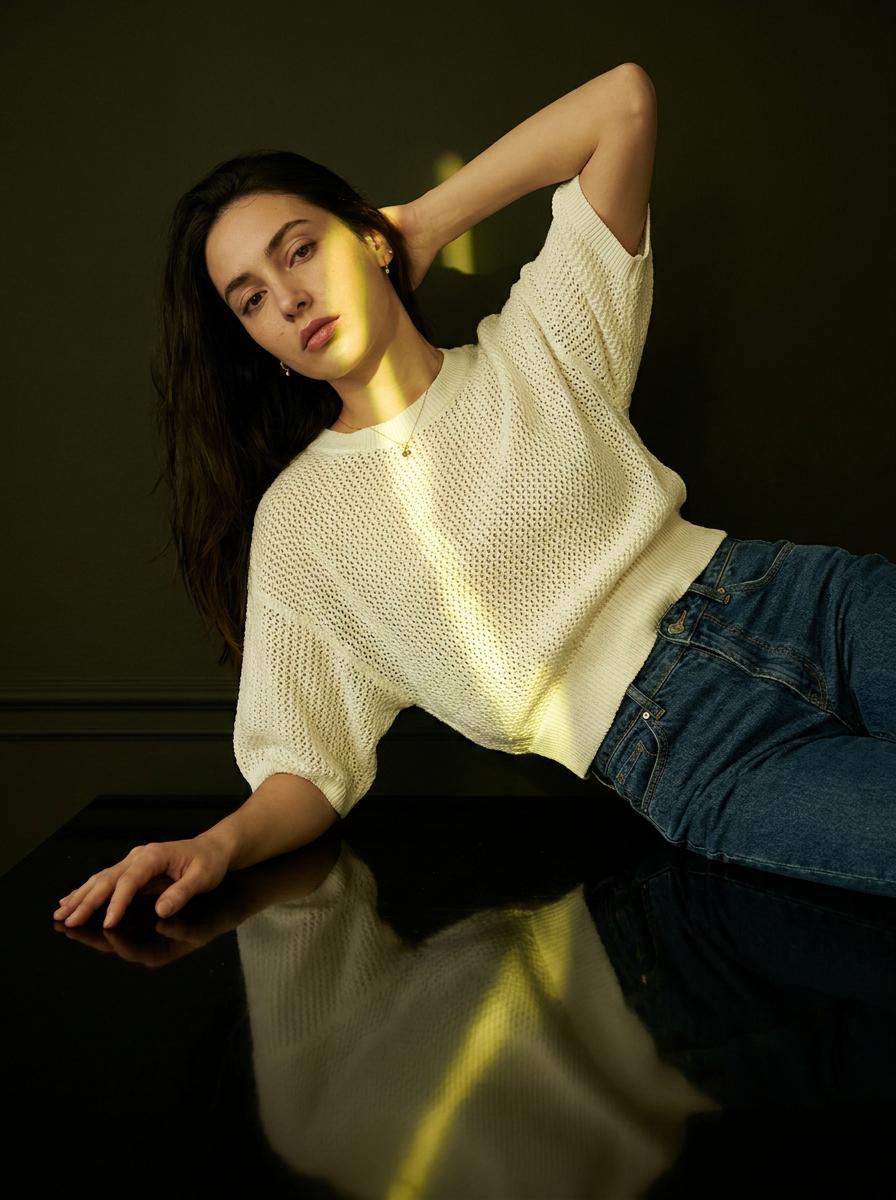
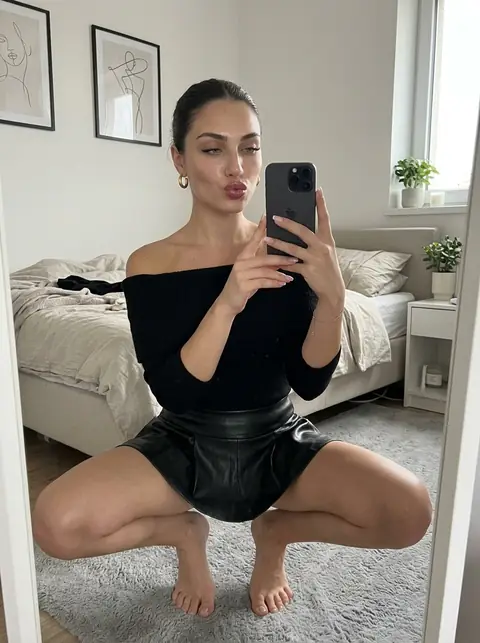
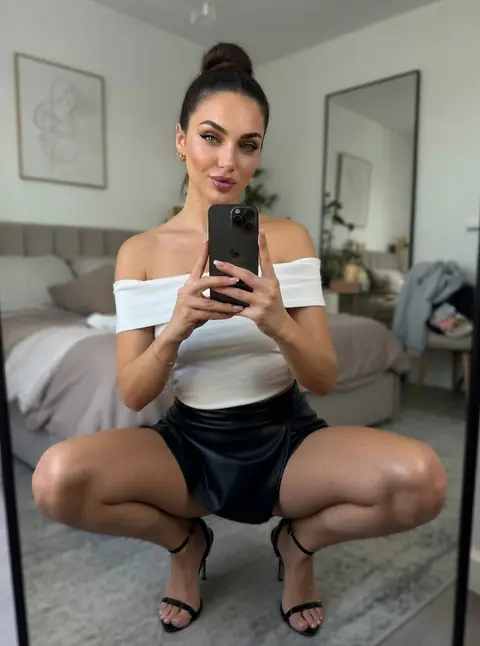
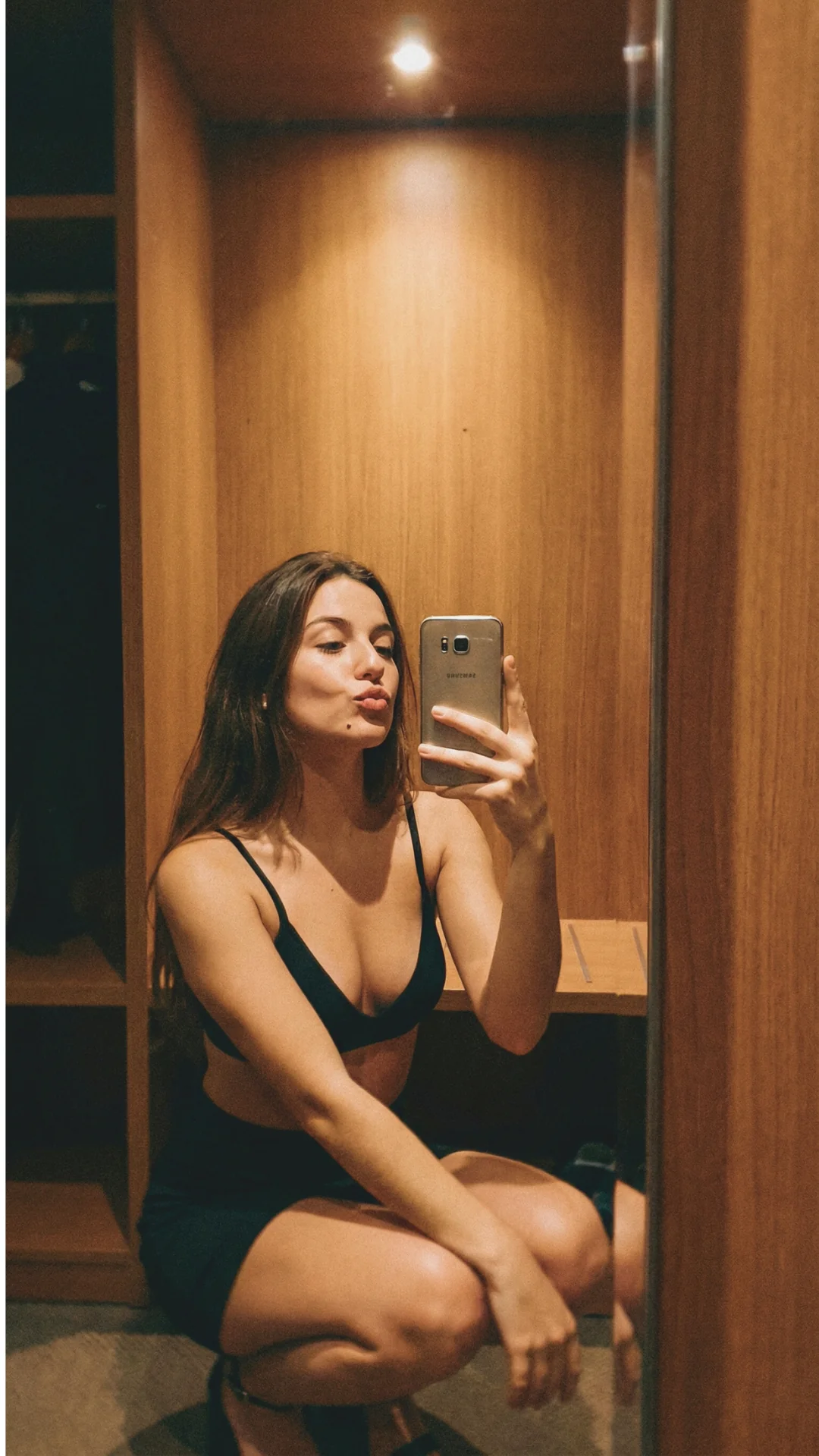
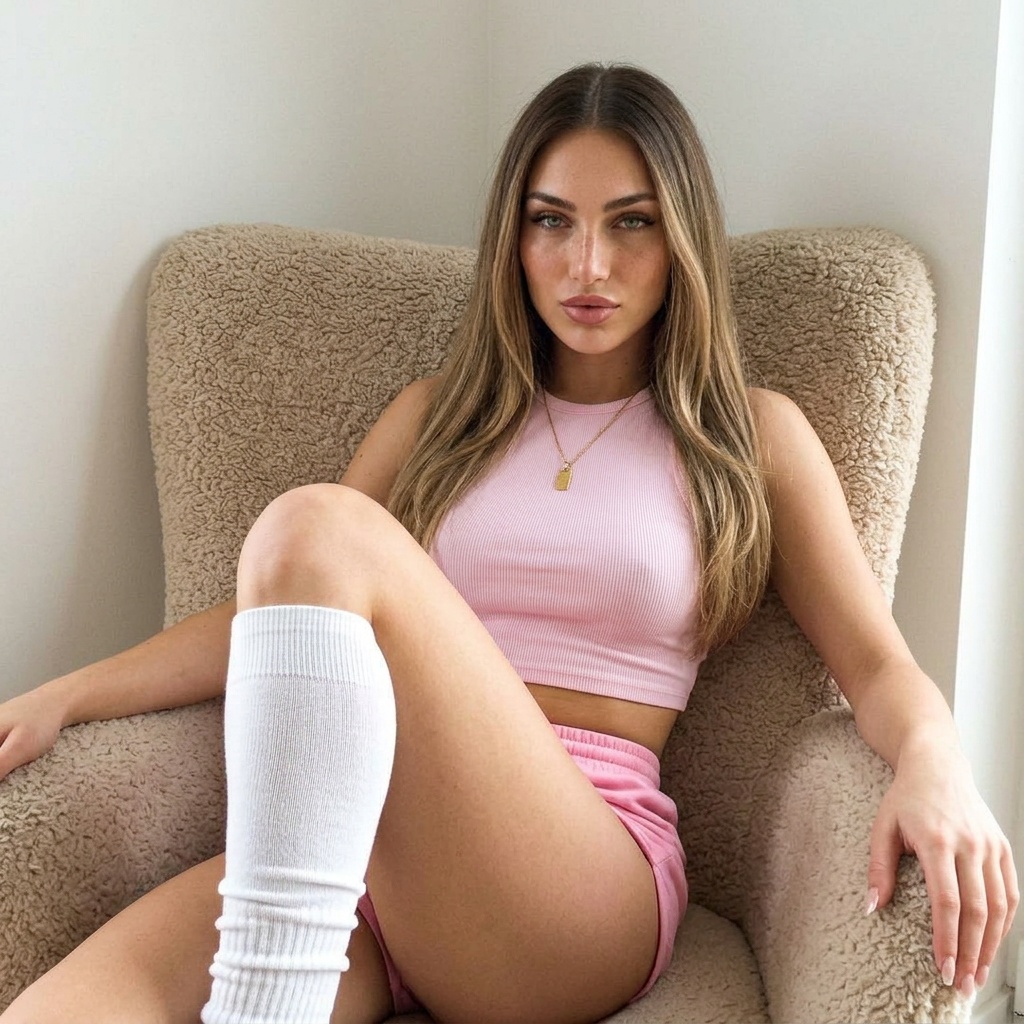
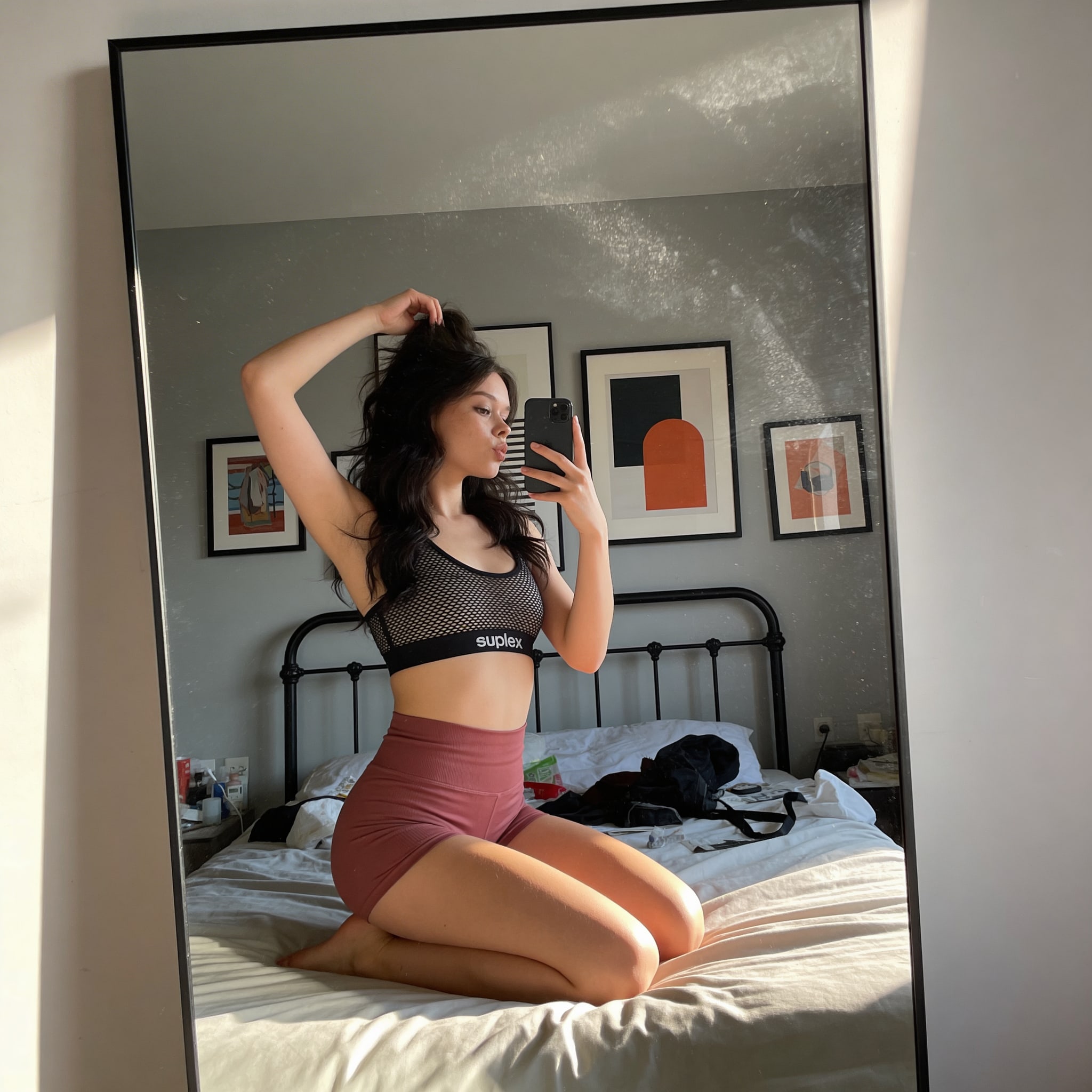
Use the provided reference image as the visual identity reference for a photorealistic 2:3 intimate dark-interior fashion editorial portrait. Preserve the person’s recognizable facial features, skin tone, long dark hair premise, calm facial character, body proportions, and overall likeness. No readable text, no logos, no watermarks, no poster layout. Place her in a nearly empty dark interior beside a glossy black stone or lacquered tabletop, with a deep olive-black wall behind her and only a faint baseboard line visible near the floor. The room should feel quiet, heavy, and underlit, with no lamps, plants, books, phone, furniture clutter, or decorative props. The reflective tabletop is the main object in the scene, acting as a dark mirror beneath her face, sleeve, and hand. Shoot from a low table-height camera position, close to the reflective surface and angled slightly upward toward her face. Frame from above the raised elbow to below the tabletop reflection, with the glossy surface occupying the lower third of the image. Keep her face, hard light stripe, raised arm, textured white knit, braced hand, denim waistband, and softened reflection clearly readable. The crop should feel close, diagonal, and slightly trapped, not like a relaxed lifestyle portrait. Pose her leaning diagonally across the tabletop edge with one forearm braced on the reflective surface, knuckles and wrist lightly pressing down so the hand creates a visible contact point and a softened reflection below it. Her other arm bends up behind the head, elbow rising near the upper crop, with the fingers mostly hidden in the hair. Her torso angles back into shadow, hips lower and slightly turned, with the denim waistband cutting across the lower-left side of the frame. Her head tilts toward the light, eyes looking near the lens but not fully performing, lips softly parted, expression quiet, tired, and withheld. Style her in a warm white cropped open-stitch cotton knit top with short loose sleeves, a soft ribbed hem, visible shoulder seams, raised loop texture, and small shadowed openings between the stitches. The knit should have real cotton weight and tactile structure, catching light on the raised threads while the open channels fall into tiny shadows. It should read as a fashion knit top, not lingerie, lace underwear, swimwear, or a shapeless crochet sheet. Pair it with dark blue high-waisted denim jeans with a clean waistband, belt loops, metal button, side seam, and slight compression where the body leans into the table. The denim should stay mostly in shadow but remain readable through cool highlights and fabric grain. Keep accessories minimal: one tiny pendant at the collarbone and very small earrings if visible, no heavy jewelry, no sunglasses, no bag. Hair follows the reference image’s long dark premise, worn loose and slightly undone, falling over one shoulder and into the shadow side of the face. A few strands catch the hard light near the cheek and collarbone. Makeup is restrained dark editorial: realistic skin texture, softly defined brows, lightly shadowed eyes, muted warm lips, faint cheek warmth, and a natural sheen across the nose bridge, cheekbones, lower lip, and collarbone area. Lighting hierarchy: a single hard directional beam of late-day light enters from camera-left, warm yellow with a faint green cast, slicing across the knit texture, lower cheek, lips, raised forearm, braced hand, denim edge, and glossy tabletop. The surrounding room falls into deep olive-black shadow. The light creates a sharp-edged patch on the sweater and a dimmer duplicate streak in the tabletop reflection. Preserve small shadows under the jaw, behind the raised arm, inside the knit openings, beneath the braced knuckles, along the denim waistband, and at the edge where the body meets the table. Palette hierarchy: hero colors are warm white knit and hard yellow-green sunlight. Support colors are warm skin, dark hair, dark blue denim, and muted rose lips. Restraint colors are olive-black wall shadow, glossy black tabletop reflection, deep charcoal floor edge, and faint greenish light falloff. Keep the palette dark, tactile, and controlled, with the white knit and reflected light as the brightest visual strikes. Object hierarchy: primary focus is her face, lips, hard light across the cheek, raised arm, and braced hand. Secondary focus is the open-stitch white knit, denim waistband, tabletop reflection, and diagonal body line. Tertiary supports are the tiny pendant, loose hair strands, faint wall texture, baseboard line, shadow falloff, and softened reflection distortion. Edge activity: dominant edge pressure comes from the raised elbow nearing the upper crop and the glossy tabletop reflection pressing along the bottom edge. Secondary edge pressure comes from the diagonal light stripe cutting across the center of the frame and the denim waistband entering from the lower-left shadow. Keep the frame intimate, dark, and physically compressed, with the reflective surface and hard light controlling the composition. The final image should read as a dark tactile fashion portrait: a woman leaning across a glossy black tabletop, one hand braced on the reflection, one arm lifted behind her head, warm white open-stitch knit catching a hard yellow-green light beam, dark denim sinking into shadow, long hair falling around the face, and her reflection dimly repeating the light below. Maintain realistic skin texture, accurate raised-arm anatomy, believable hand-table contact, clean reflection physics, real open-stitch knit behavior, readable denim construction, physically consistent hard light, deep shadow falloff, natural hair strands, and lens-realistic close focus. Avoid lingerie framing, lace underwear confusion, fake crochet texture, warped arms, extra hands, missing reflection, mirror-perfect reflection, plastic skin, fake HDR, soft generic window glow, over-smoothed beauty lighting, added props, readable text, logos, and casual lifestyle posing.
- Engine
- nano-banana
- Dimension
- portrait_4_3
- Gender
- female
- Age
- any