Prompt 1
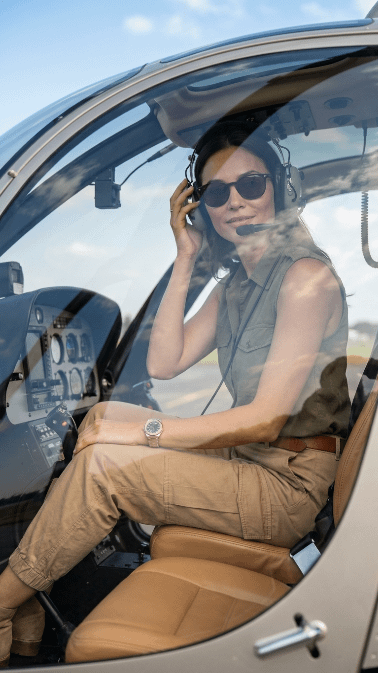
The woman in the uploaded reference image (DO NOT TOUCH FACE) is the primary subject. Preserve the exact adult facial structure, facial proportions, skin tone, eye shape, natural skin texture, hairstyle, body proportions, and recognizable appearance. Do not alter identity. Build everything else around the concept image. Create a photorealistic luxury editorial portrait inside the front passenger seat of a modern helicopter. The image is driven by the feeling that the viewer is looking through the helicopter's large curved bubble canopy rather than standing inside the aircraft. Preserve the canopy as an active visual element instead of making it disappear. The dominant visual mechanism is the interaction between the subject, the cockpit, and the reflective canopy. The curved helicopter glass should produce realistic reflections of blue sky, soft clouds, subtle environmental shapes, and natural glare that partially veil the subject without obscuring her face. The reflections should add atmosphere and depth rather than looking like post-processing overlays. The aircraft should feel expensive, operational, and mechanically authentic. The subject sits low in the cockpit with a relaxed, self-assured posture. Her knees remain comfortably apart due to the confined cockpit geometry rather than exaggerated posing. One arm rests naturally across her lap while the opposite hand lightly touches the aviation headset near one ear as if listening to incoming radio communication. Her shoulders remain relaxed, torso slightly angled, posture casual rather than posed. The expression is calm, composed, quietly confident, with lips softly parted and minimal camera awareness. Wardrobe combines refined utility with understated luxury. She wears a fitted olive utility-inspired sleeveless top with subtle tailoring, premium cargo trousers with structured pockets, a slim leather belt, dark oversized luxury sunglasses, a professional aviation headset with attached microphone, a modern luxury watch, delicate bracelets, understated rings, and clean neutral-toned manicure. The outfit should feel like elevated expedition fashion rather than military costume or tactical gear. Hair falls naturally beneath the headset with soft movement and realistic compression where the headset contacts the hair. Preserve believable fabric folds, premium stitching, realistic cargo-pocket construction, authentic leather textures, brushed metals, and aviation hardware. The cockpit should feel genuine, featuring premium tan leather seats, seat belts, instrument housing, structural framing, controls, switches, and visible helicopter mechanics. Every component should exhibit realistic engineering and material quality. Avoid simplified interiors or generic aircraft cabins. Lighting is bright natural afternoon daylight entering through the canopy. The canopy produces layered reflections, subtle lens artifacts, soft haze, and gentle contrast transitions while maintaining crisp facial detail. Skin remains naturally textured with realistic pores, believable specular highlights, and clean tonal transitions. Preserve cinematic highlight roll-off and avoid excessive HDR. Color grading should emphasize warm tan leather, muted olive clothing, charcoal aviation hardware, soft blue sky reflections, neutral skin tones, and restrained luxury. Maintain premium editorial contrast without oversaturation. Preserve realistic canopy reflections, slight atmospheric haze, and expensive travel-photography color science. Camera position remains outside the helicopter looking through the canopy using approximately a 70–85mm equivalent focal length. The curved glass compresses and subtly distorts reflections while the subject remains the focal point. The cockpit framing should naturally surround her without feeling centered or symmetrical. Primary hierarchy: reflective helicopter canopy and cockpit immersion. Secondary hierarchy: relaxed seated posture, headset interaction, and facial identity. Tertiary hierarchy: premium utility wardrobe, luxury accessories, and authentic aircraft engineering. The final image should feel like an editorial feature photographed moments before takeoff—luxurious, quiet, aspirational, and authentic—where the helicopter itself becomes part of the composition through layered reflections instead of merely serving as a background. Avoid removing the canopy reflections, generic airplane interiors, tactical or combat styling, over-polished skin, exaggerated glamour poses, symmetrical composition, excessive cockpit clutter, artificial HDR, plastic materials, fake aviation controls, unreadable logos, watermarks, captions, interface elements, or any result where the helicopter no longer feels like an active part of the image's visual language.
- Engine
- Nano Banana
- Dimension
- Portrait (9:16)
- Gender
- Female
- Age
- Any