Prompt 1
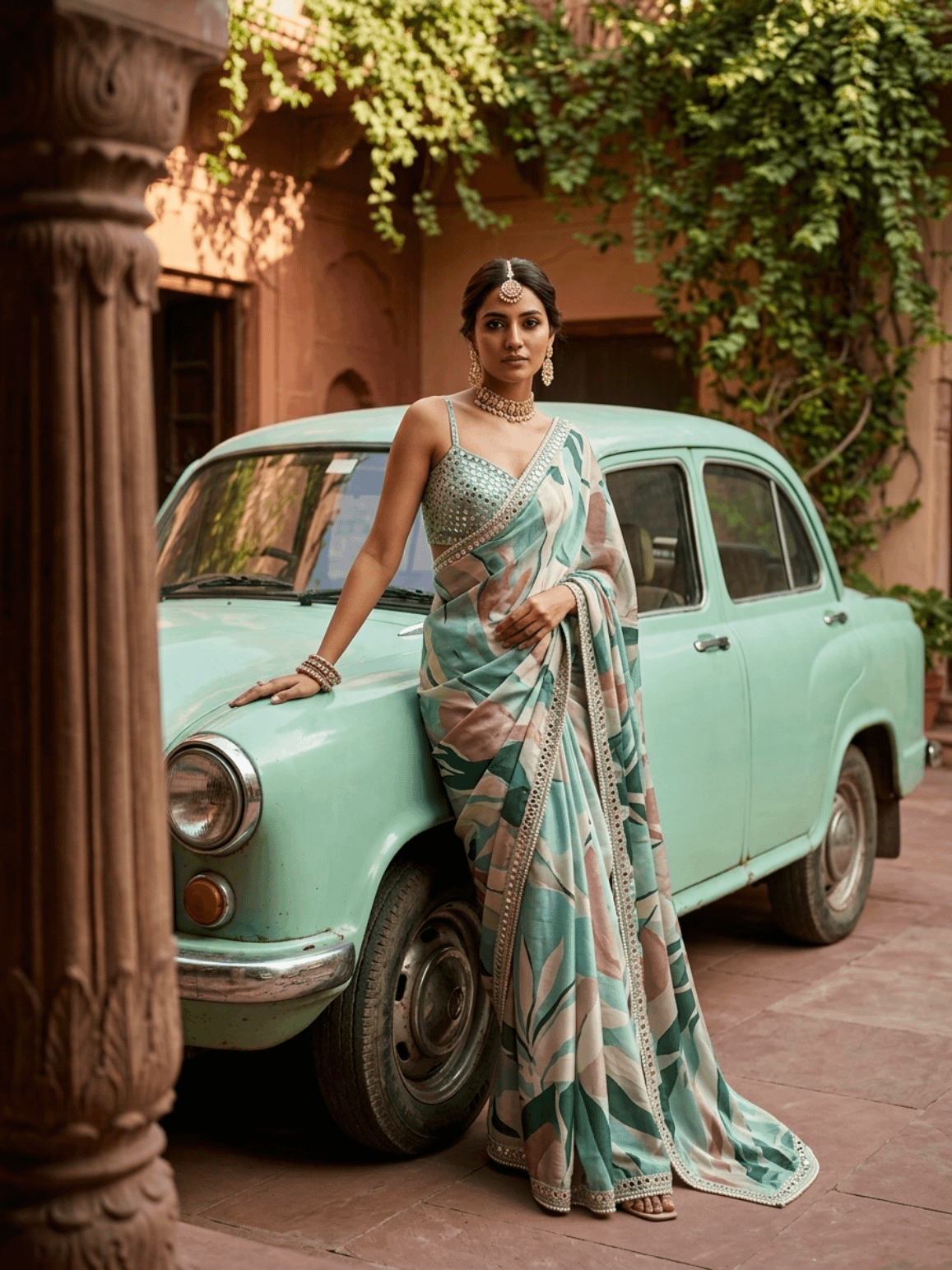
Use the provided reference image for identity, facial structure, skin tone, age impression, and natural body proportion preservation while rebuilding the scene as a high-fashion South Asian couture editorial in a real courtyard setting. Preserve recognizable subject identity, believable anatomy, and natural body proportions, but re-author the composition, styling, object hierarchy, and lighting so the image feels cinematic, fashion-literate, and culturally grounded rather than like a bridal catalog or magazine cover. No readable text, no logos, no masthead, no poster layout, no plastic skin, no fake showroom car polish. Place the subject in the courtyard of Haveli Dharampura in Old Delhi, surrounded by red sandstone paving, weathered terracotta plaster walls, dense climbing greenery, and a slightly imperfect vintage mint-green Hindustan Ambassador-style car with rounded hood, chrome grille, small circular headlights, aged tires, and subtly worn paint. The car should feel real, used, and elegant rather than perfectly restored. Keep the courtyard enclosed and warm, with foliage pressing into the upper background and architecture creating quiet depth behind the car. Frame the image as a vertical editorial portrait with a compressed 70–85mm lens feel from a slightly low angle across the courtyard. Use a large soft out-of-focus foreground obstruction along the left edge, like a carved wooden column or antique brass courtyard fixture, blurred enough to create depth without hiding the subject. The subject should sit and lean against the front quarter of the car, slightly off-center, with the hood and chrome grille anchoring the lower frame. Avoid clean showroom symmetry; the frame should feel observed through courtyard objects, intimate and slightly hidden. Pose the subject with one hip resting against the front fender and one thigh angled along the edge of the hood, creating a controlled diagonal through the body. One palm presses flat onto the mint hood with visible weight through the wrist and shoulder, while the other hand lightly gathers the sari drape near the hip so the fabric falls in a long vertical cascade toward the ground. Her torso should be upright but not stiff, shoulder line slightly uneven, chin turned to the side, eyes focused just past camera with a composed, guarded expression. The pose should feel elegant, self-possessed, and quietly tense rather than smiling or performative. Style her in a contemporary couture sari built from fluid sea-glass silk chiffon and pale jade satin, printed with abstract botanical and architectural motifs in muted turquoise, rose, cream, and deep green. The sari should have real fabric weight, translucent layered edges, soft pleating, and a hand-finished border with small mirror discs and pearl-like beads that catch light without looking cheap. Pair it with a fitted embroidered blouse with thin straps, floral mirrorwork, and structured support, keeping the neckline refined and the shoulder line clean. The styling should feel modern South Asian couture, not costume, not generic bridalwear. Jewelry should be ornate but controlled: a delicate gold maang tikka centered at the hairline, sculptural chandelier earrings, a close-set kundan-style choker with muted stones, and stacked gold bangles concentrated on one wrist. Keep jewelry hierarchy clear so the headpiece and neck jewelry frame the face while the wrist jewelry supports the braced-hand pose. Hair should be swept back into a polished low bun with soft volume at the crown and a few controlled wisps near the temple. Makeup should be refined editorial glamour with smoked eyes, warm skin, softly contoured cheekbones, and muted rose-brown lips. Use a disciplined palette of mint car paint, sea-glass jade, muted turquoise, rose-gold, warm terracotta, oxidized chrome, cream canvas, deep foliage green, and warm brown shadow. Encode the palette physically through the car body, sari silk, mirrorwork, jewelry, sandstone paving, wall plaster, chrome grille, foliage, and skin reflection. Do not add loud neon color or random jewel tones. The mint car should be the largest color field, but the subject’s face, jewelry, and sari border must remain the highest-detail read. Lighting should feel like warm late-afternoon courtyard light filtered through leaves, with soft highlights across the cheekbones, collarbone, jewelry, chrome grille, and curved mint hood. Add mild dappled shadow from foliage across the car and wall, but keep the face clean enough for strong priority. The sari fabric should show layered translucency, satin sheen, and embroidered texture. The car should show subtle scratches, dust, worn rubber, aged chrome, and real reflections rather than flawless CGI gloss. Preserve believable skin texture, natural hand anatomy, and real contact between body, fabric, and car. The final image should read as a quiet couture arrival: a poised woman in modern South Asian luxury styling leaning into a mint vintage car inside an old courtyard, surrounded by warm walls, foliage, chrome, and filtered light. The image should feel glamorous, restrained, body-aware, and culturally specific without becoming a wedding advertisement. Preserve the car as a structural object, the sari as the movement system, the jewelry as the face frame, and the foreground obstruction as depth pressure. Avoid readable text, logo marks, bridal catalog posing, overdecorated costume styling, fake fantasy palace details, plastic fabric, perfect showroom surfaces, dead centered framing, or clutter that competes with the subject’s face.
- Engine
- nano-banana
- Dimension
- portrait_4_3
- Gender
- female
- Age
- any