Prompt 1
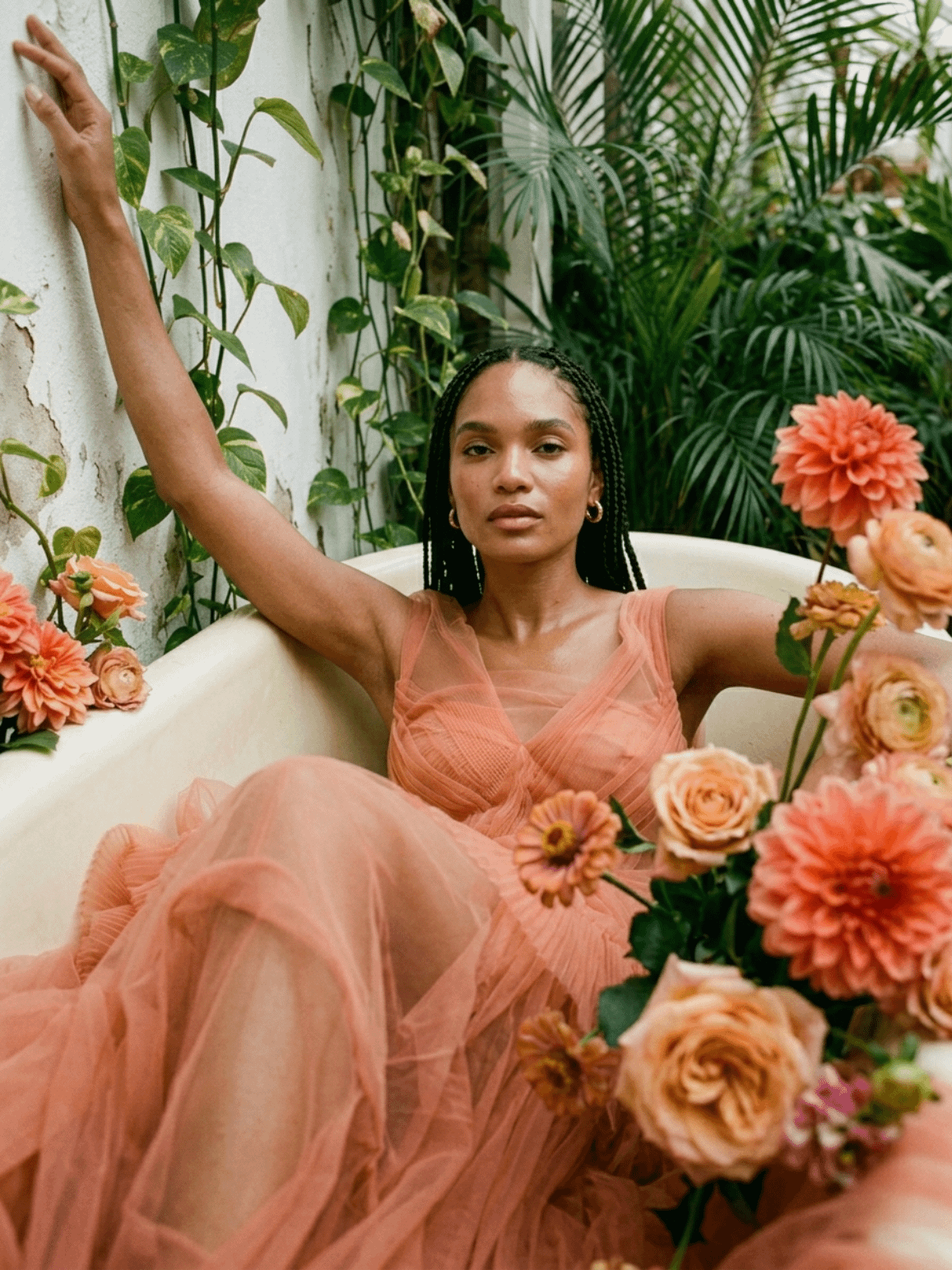
Use the provided reference image for identity, facial structure, skin tone, age impression, and natural body proportion preservation while rebuilding the scene as a humid greenhouse fashion editorial built around a reclining subject inside an aged clawfoot bathtub. Preserve recognizable identity, believable anatomy, and natural body proportions, but re-author the styling, environment, flower hierarchy, camera pressure, and fabric behavior so the image feels cinematic, tactile, and high-fashion rather than like a decorative fantasy portrait. No readable text, no logos, no watermark, no bridal styling, no princess gown, no plastic skin, no fake spa setting. Place the subject in a narrow overgrown greenhouse bathroom inside an old conservatory, with weathered white plaster walls, chipped painted wood, trailing pothos vines, dense palms, broad tropical leaves, damp stone floor, and an aged cream clawfoot porcelain bathtub with worn enamel, carved feet, and small chips along the rim. The setting should feel lush, humid, and slightly neglected, as if the tub has become part of the garden. Avoid random birdcage props unless they are barely visible and naturally aged in the background; the main world should be tub, plants, plaster, flowers, and damp shadow. Frame the image as a vertical close editorial portrait from slightly below tub-rim height, with the camera placed close enough that foreground flowers and tulle partially press into the lower frame. Use mild lens compression so the tub, dress, flowers, and plants stack around the subject without flattening her face. Keep the composition off-center and intimate: the porcelain tub curves across the lower right, peach tulle spills heavily toward the lower left, and dense leaves close in from the upper background. Avoid clean centered bathtub symmetry. Pose the subject reclining inside the tub with her torso angled diagonally toward camera, one shoulder slightly compressed against the inner porcelain curve and her back supported by layered tulle. One arm lifts above her head with the wrist loose and fingers softly bent near the peeling wall, creating a vertical gesture against the vines. The other arm rests lower through the fabric or along the tub edge, partially hidden by flowers and tulle. Her legs extend through the peach layers with only subtle shape visible beneath the fabric, preserving believable anatomy without turning the dress into a shapeless mass. Her facial language should be calm, direct, and slightly defiant. Eyes meet the camera through the surrounding flowers and fabric, chin gently lifted, lips relaxed, brows softly focused. Expression should feel composed and private, not smiling, not dreamy, not theatrical. Preserve face priority with a clean warm light path across the eyes, nose bridge, cheekbones, and lips while allowing the lifted arm, hairline, and outer dress layers to fall into softer shadow. Dress her in a sculptural peach-coral couture tulle construction built from many translucent layers over a fitted tonal base, with soft volume spilling out of the tub and pooling onto the floor. The garment should feel editorial and body-aware rather than bridal or prom-like: sheer peach mesh layers, coral undertones, visible fabric depth, soft wrinkles, compressed folds where the body presses into the tub, and heavier gathered volume near the hip and lower frame. The fabric should catch light in thin veils and create darker peach shadow pockets where the layers overlap. Hair should be styled in long precise braids pulled away from the face, with a few controlled face-framing strands and natural scalp detail. Makeup should be refined editorial glamour: defined lashes, softly sculpted cheeks, warm brown liner, muted rose lips, and realistic skin texture with a slight humid sheen. Jewelry should remain minimal and secondary, such as small gold hoops or one slim ring, so the face, raised arm, tub curve, flowers, and tulle remain the visual hierarchy. Use flowers as a controlled foreground system, not scattered decoration. Arrange coral dahlias, peach roses, faded salmon ranunculus, muted orange zinnias, and a few cream blossoms around the tub rim and lower foreground, with irregular stems, green leaves, slight wilt, petal bruising, pollen, and natural asymmetry. The largest flower mass should sit near the lower right tub rim as foreground pressure, while smaller blooms trail across the floor and fabric. Keep flowers dense enough to feel lush but not so dense that they hide the face or body line. Use a disciplined palette of peach tulle, coral flowers, porcelain cream, warm brown skin, faded white plaster, damp stone gray, deep tropical green, dark soil shadow, and small gold highlights. Encode the palette physically through fabric translucency, flower petals, chipped tub enamel, skin warmth, plaster texture, wet floor, plant leaves, and jewelry. Avoid candy pink, neon orange, or oversaturated fantasy color. The image should feel warm, humid, and organic, with peach and green locked in tension. Lighting should feel like soft afternoon greenhouse light filtered through leaves, with warm directional illumination from camera-left and subtle darker pockets beneath the plants, inside the tub, under the flower clusters, and between tulle layers. Add gentle specular highlights on the porcelain rim, humid skin, glossy leaves, and small flower petals. Keep the face crisp and dimensional, the nearest flowers slightly sharper than the background plants, and the deepest greenery softly falling into shadow. Avoid flat beauty lighting, fake HDR, overly clean studio polish, and plastic flower surfaces. The final image should read as a sensual but restrained greenhouse bath editorial: a poised woman reclining in an aged clawfoot tub, swallowed by peach tulle, coral flowers, and tropical leaves, with her lifted wrist and direct gaze cutting through the softness. The allure should come from reclined body tension, translucent fabric volume, humid skin, flower proximity, and the contrast between fragile tulle and chipped porcelain. Preserve realistic hand anatomy, believable body support, real fabric compression, organic plant variation, face priority, and clear object hierarchy. Avoid wedding dress clichés, fairytale bathtub fantasy, random decorative props, fake flowers, overly perfect symmetry, readable text, excessive jewelry, or clutter that competes with the subject’s face.
- Engine
- nano-banana
- Dimension
- portrait_4_3
- Gender
- female
- Age
- any