Prompt 1
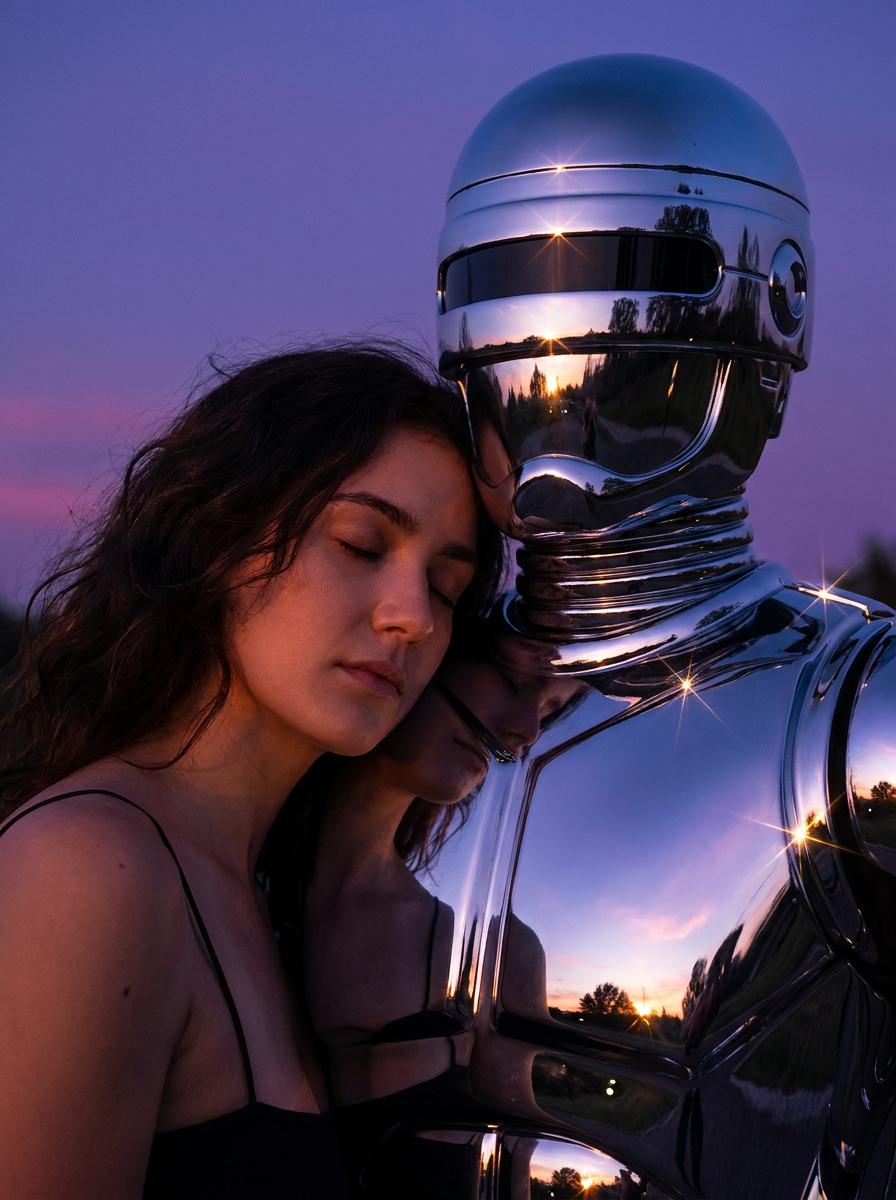
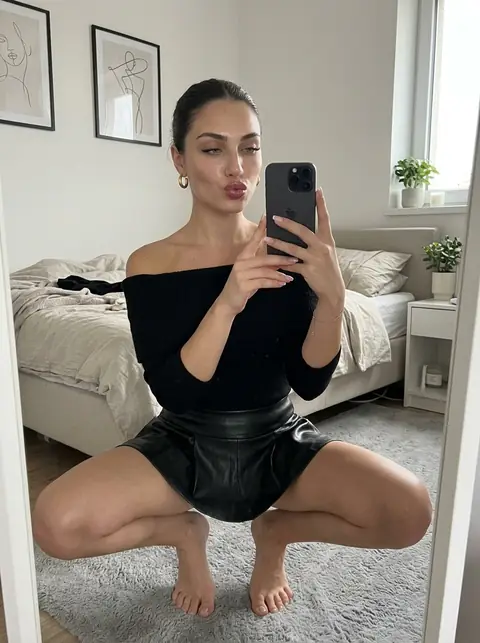
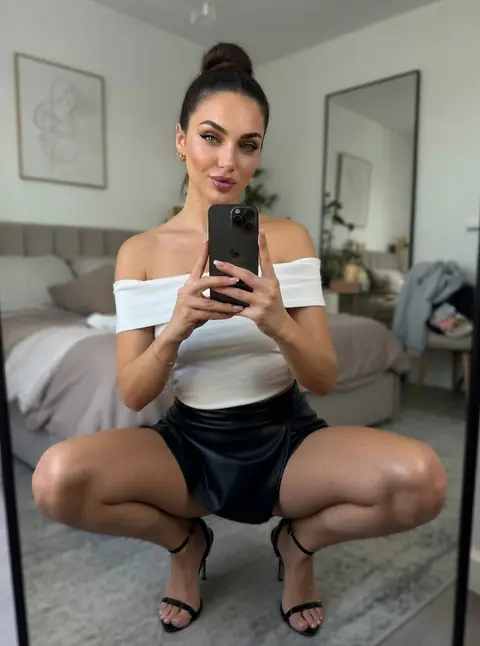
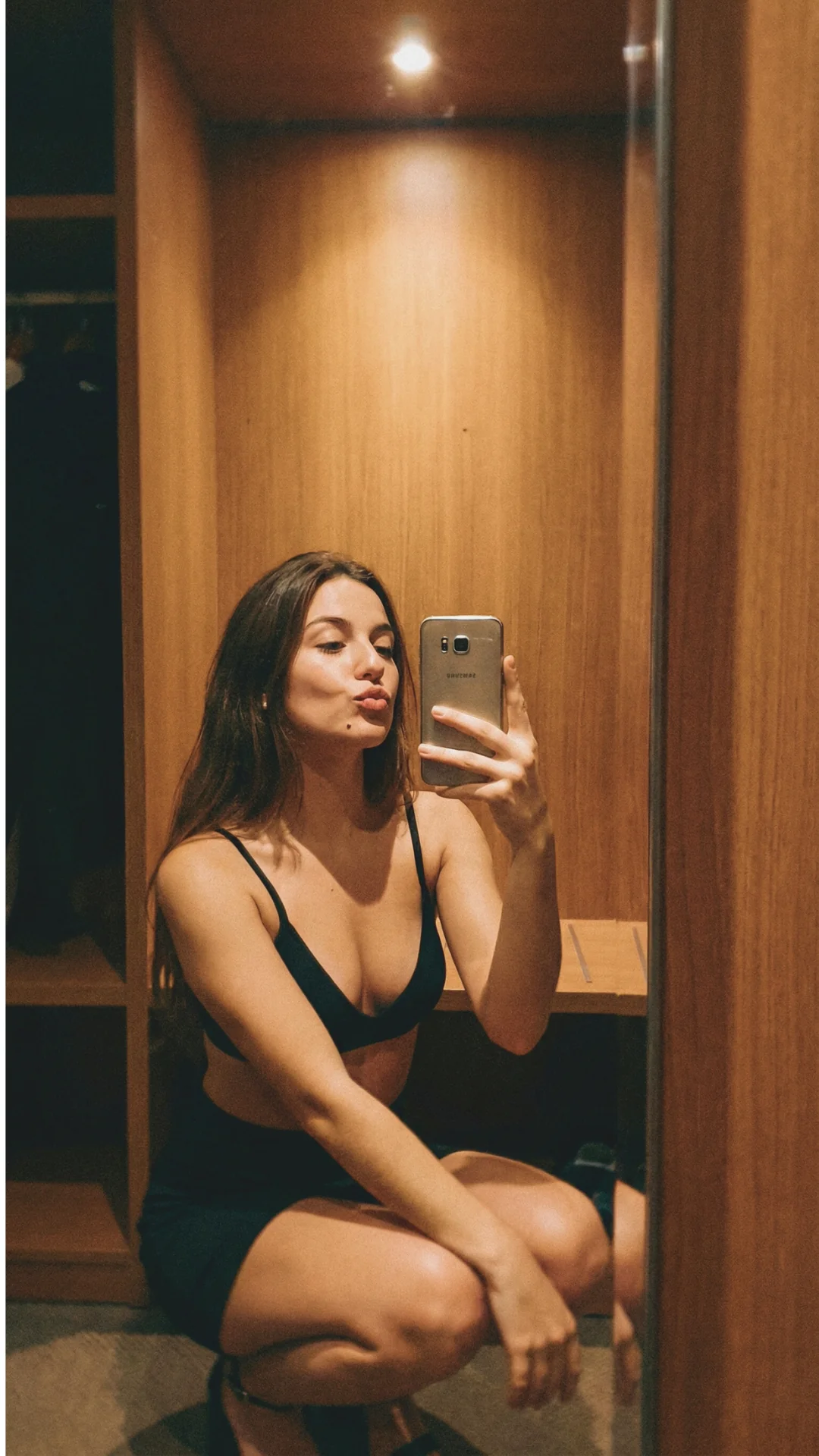
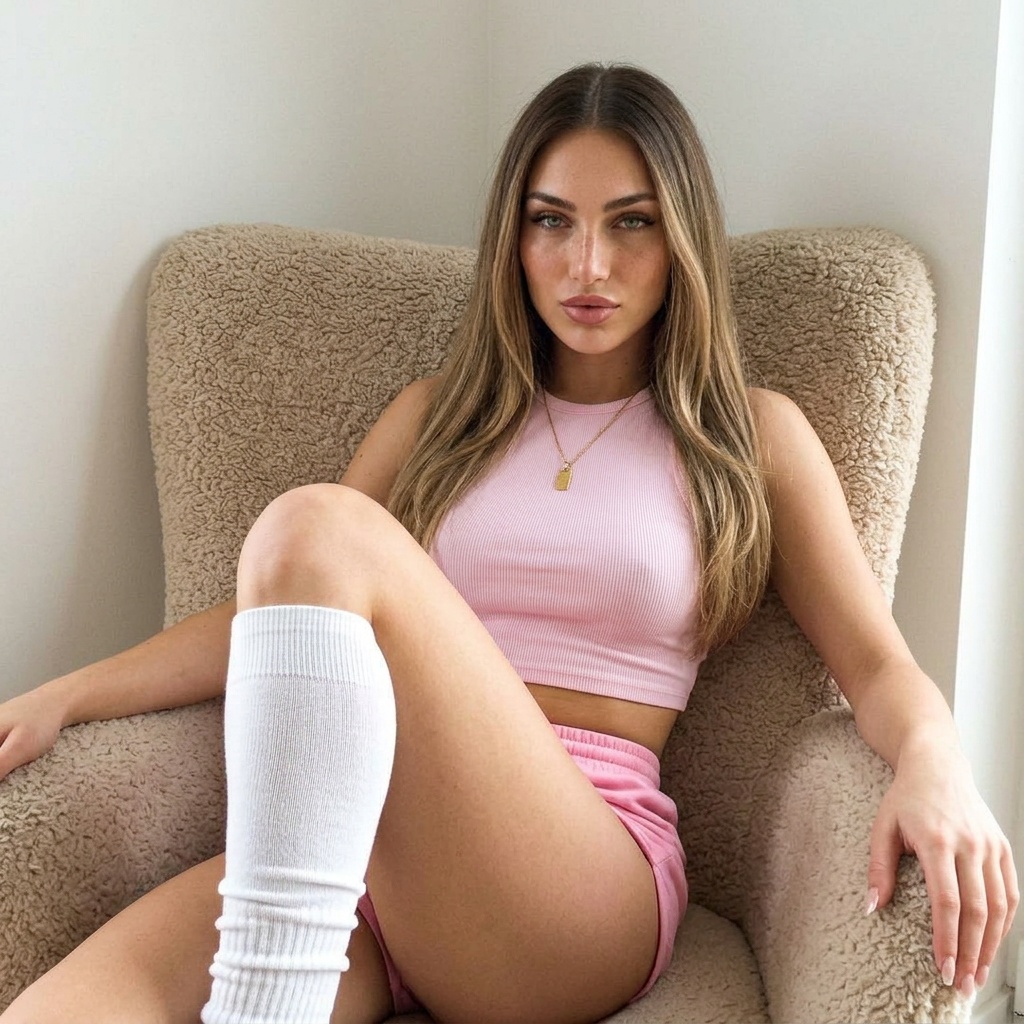
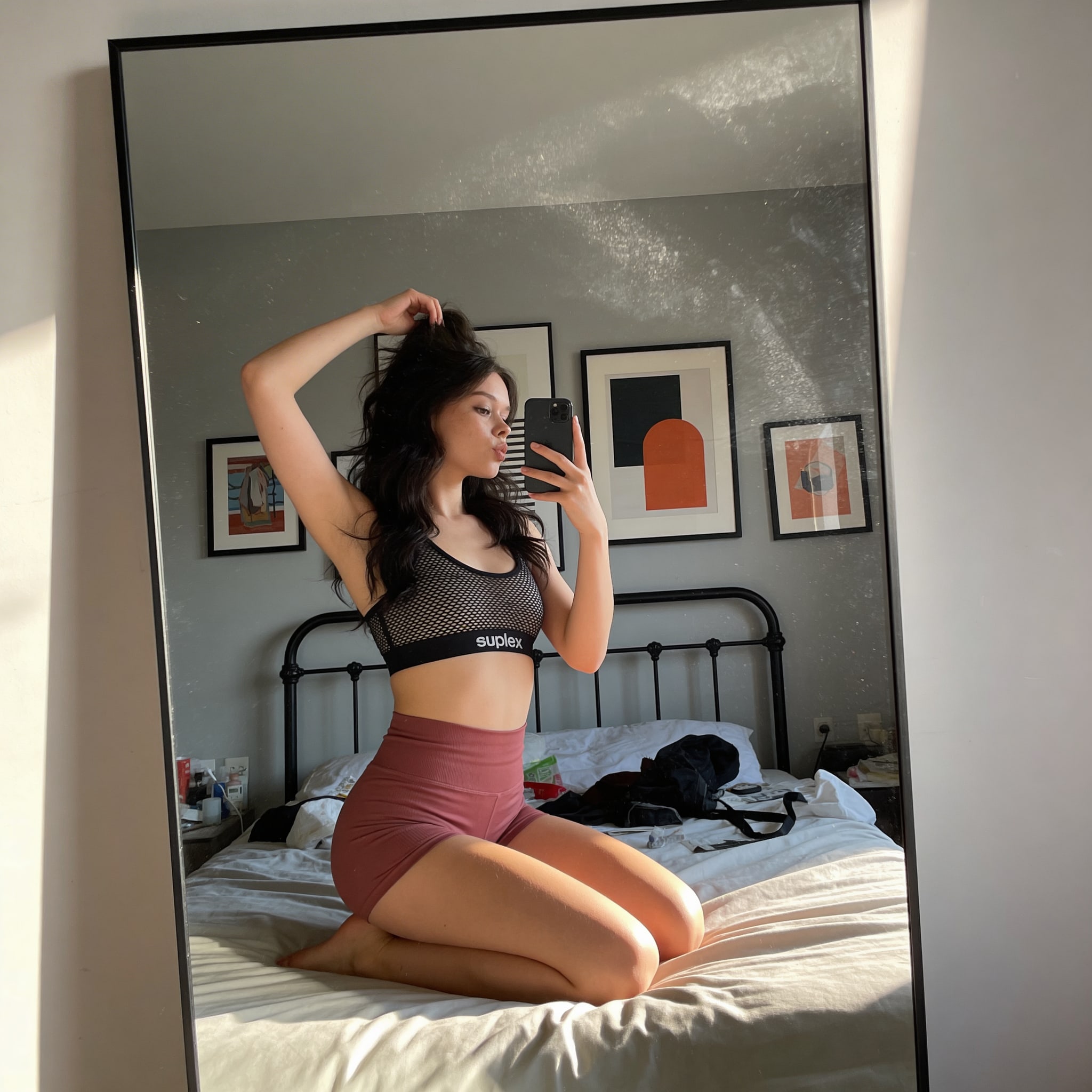
Use the provided reference image as the visual identity reference for a photorealistic 4:5 sci-fi fashion editorial portrait. Preserve the uploaded person’s recognizable facial identity, complexion, hair premise, adult appearance, facial proportions, and overall likeness. Do not lock the subject to the complexion of the inspiration image. No readable text, no logos, no watermark, no poster layout. Create an intimate close portrait of the subject leaning her face and shoulder against a tall chrome humanoid robot under a deep violet-pink dusk sky. The image should feel like a luxury sci-fi editorial: human warmth pressed against cold reflective metal, quiet emotional stillness, hard mirror highlights, and cinematic sunset color. Frame the image tightly from above the robot helmet to below the upper chest and shoulder area, with the robot occupying the right side and rear of the frame while the human subject presses into the left foreground. Keep the subject’s face, closed eyes, cheek contact, lips, hair texture, shoulder line, robot helmet, visor, neck rings, chest plates, chrome reflections, and starburst highlights clearly readable. The crop should feel close, intimate, and physically compressed, not wide or action-scene-like. Pose the subject with eyes closed, cheek and temple resting gently against the robot’s upper chest or shoulder armor. Her expression is calm, private, and almost asleep, with relaxed lips and no smile. One shoulder angles toward camera, and the head tilts into the metal surface with believable contact pressure. Keep the pose sensual through stillness and closeness, not through exaggerated body display. Style the subject with glossy dark waves or the uploaded reference’s hair premise, softly shaped around the face and shoulder. The hair should catch small warm highlights from sunset and cool reflections from the chrome armor. Wardrobe stays minimal and dark, visible only as a thin black strap or clean dark neckline near the shoulder, so the face, hair, skin, and chrome remain the visual focus. No jewelry unless present in the reference image. The robot is a polished chrome humanoid figure with a smooth reflective helmet, dark horizontal visor, layered jaw plates, circular ear-like side module, segmented neck rings, broad shoulder armor, and angular chest panels. The metal surface is mirror-like but physically solid, with curved reflections of the sunset sky, dark trees or city silhouettes, and tiny points of light. The robot should feel expensive, heavy, and cinematic, not plastic, toy-like, cartoonish, or melted. Add multiple controlled starburst highlights across the robot’s chrome helmet, visor edge, chest plate, shoulder, and neck ring. The reflections should look like real specular light hitting polished metal, with sharp points and small bloom, not random glitter. Lighting hierarchy: warm sunset light from camera-left shapes the subject’s cheek, lips, eyelids, shoulder, and hair, while cool blue-violet sky reflections run across the robot’s chrome surfaces. Bright star glints punctuate the helmet and chest. Preserve soft shadows under the subject’s cheek, beneath the hairline, between skin and metal contact, inside the robot’s neck rings, under helmet plates, and between chrome armor segments. Palette hierarchy: hero colors are mirror chrome, violet dusk sky, warm skin from the uploaded reference, glossy dark hair, and gold-white star highlights. Support colors are deep blue reflections, magenta horizon glow, black visor, dark wardrobe edge, and warm sunset bronze. Restraint colors are shadowed metal gray, deep purple background, and subtle reflected silhouettes. Keep the palette rich, cinematic, and controlled without neon overload. Object hierarchy: primary focus is the subject’s closed face, cheek-to-metal contact, lips, hair, and the robot helmet beside her. Secondary focus is the chrome chest, shoulder armor, visor, neck rings, and starburst reflections. Tertiary supports are the violet-pink sky, reflected landscape shapes, soft horizon glow, and subtle atmospheric depth. Edge activity: dominant edge pressure comes from the robot helmet crowding the upper-right frame and the subject’s face pressing into the chrome body from the lower-left. Secondary edge pressure comes from star glints crossing the helmet and chest, the dark visor slicing horizontally through the robot face, and the subject’s hair filling the left edge. Keep the frame tight, reflective, and intimate. The final image should read as a luxury sci-fi fashion portrait: the uploaded reference subject resting peacefully against a polished chrome humanoid robot at dusk, eyes closed, face and shoulder softly pressed to mirror metal, violet-pink sky behind them, starburst highlights flashing across the helmet and chest, dark glossy hair catching sunset light, and the robot’s reflective armor surrounding the human softness. Maintain recognizable facial identity from the uploaded reference, realistic skin texture, believable skin-to-metal contact, accurate closed-eye anatomy, natural hair behavior, clean chrome armor geometry, physical mirror reflections, controlled star highlights, consistent sunset lighting, and lens-realistic depth. Avoid locking the complexion to the inspiration image, visible eyes, action-scene posing, toy robot design, melted chrome, random glitter, plastic skin, fake HDR, over-smoothed beauty lighting, excessive exposure, sci-fi cosplay armor, unreadable logos, and generic woman-with-robot imagery.
- Engine
- nano-banana
- Dimension
- portrait_4_3
- Gender
- female
- Age
- any